Category: USA

  • Harvey Mudd College

    Harvey Mudd College

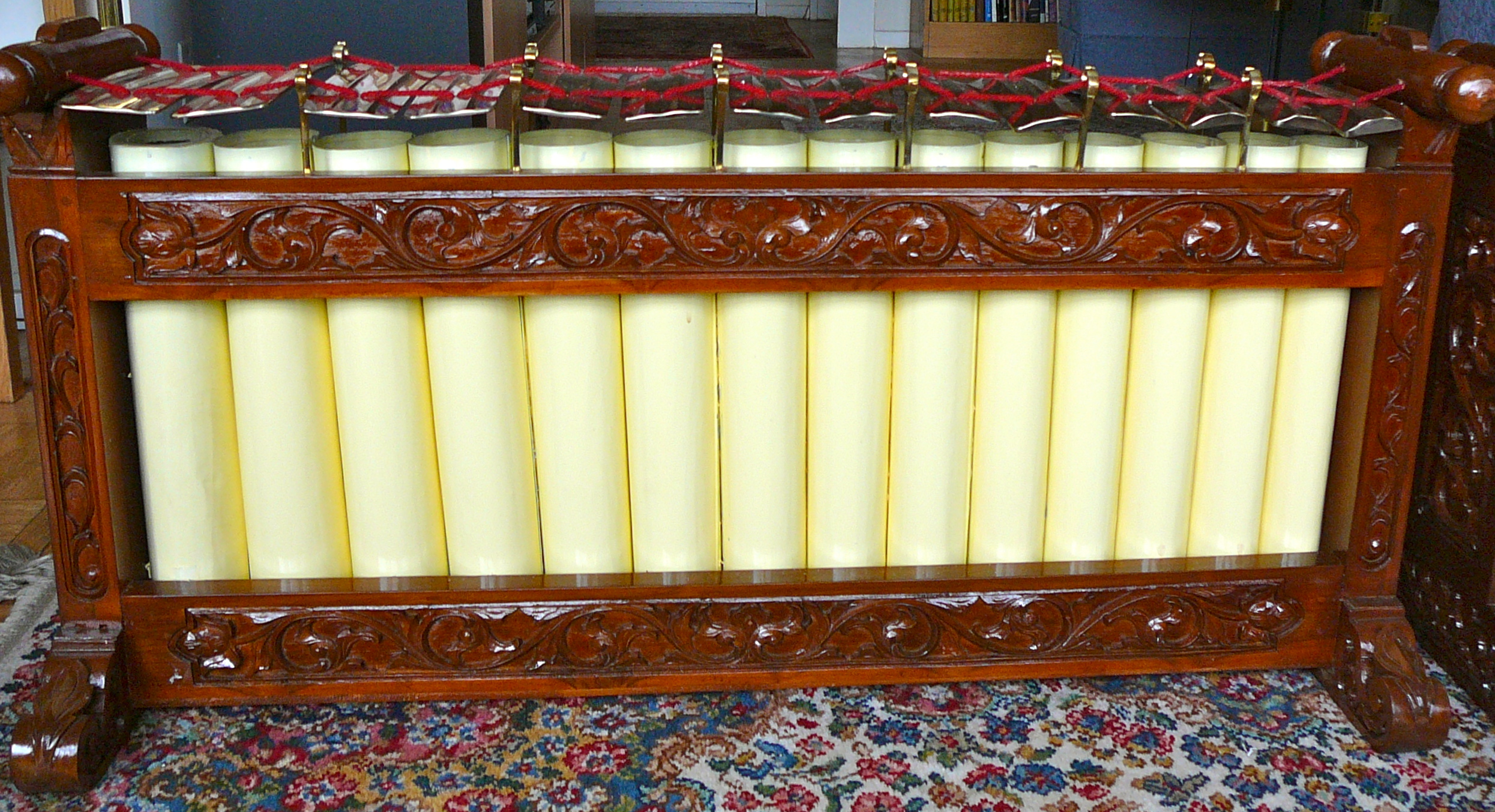
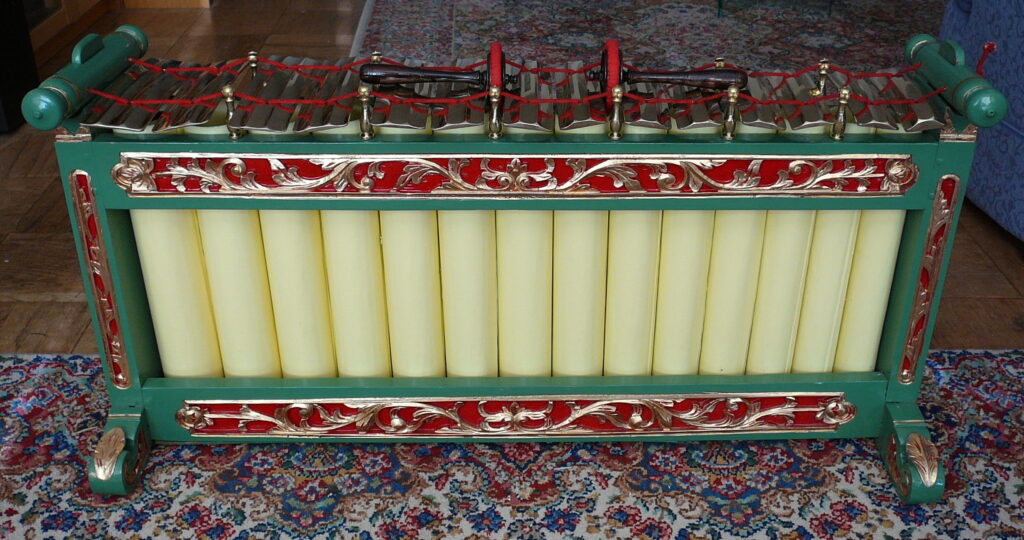
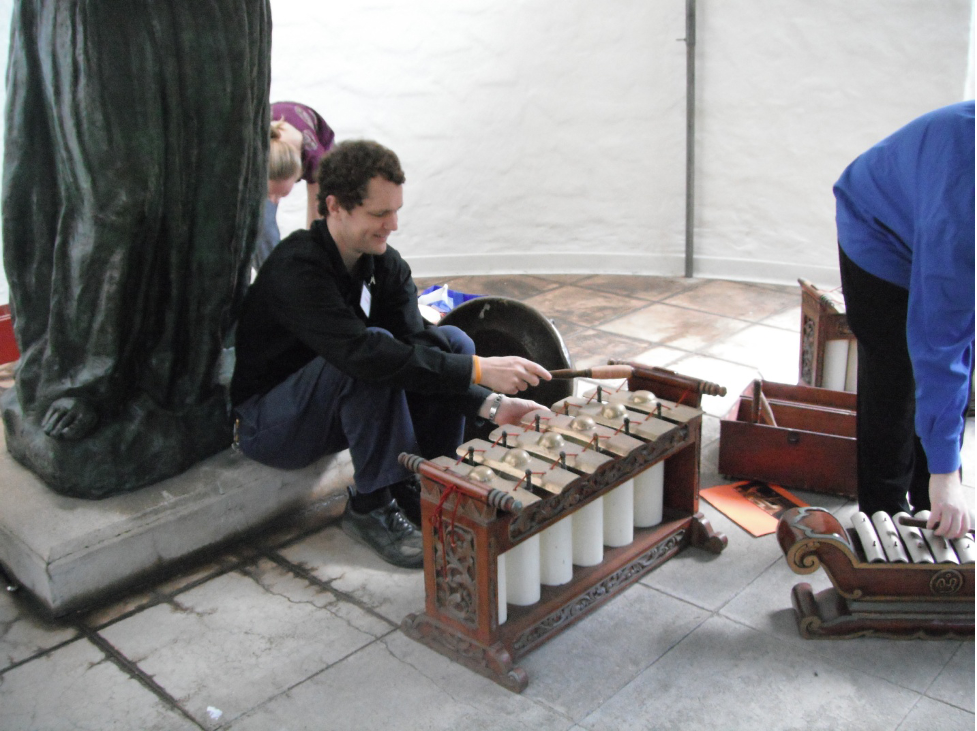
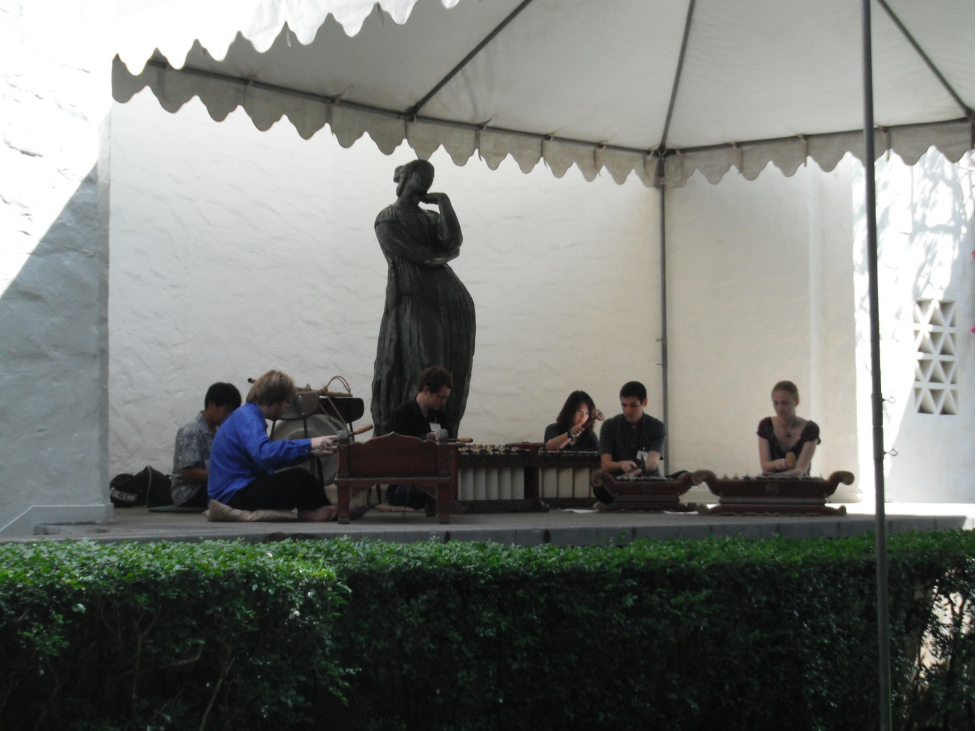
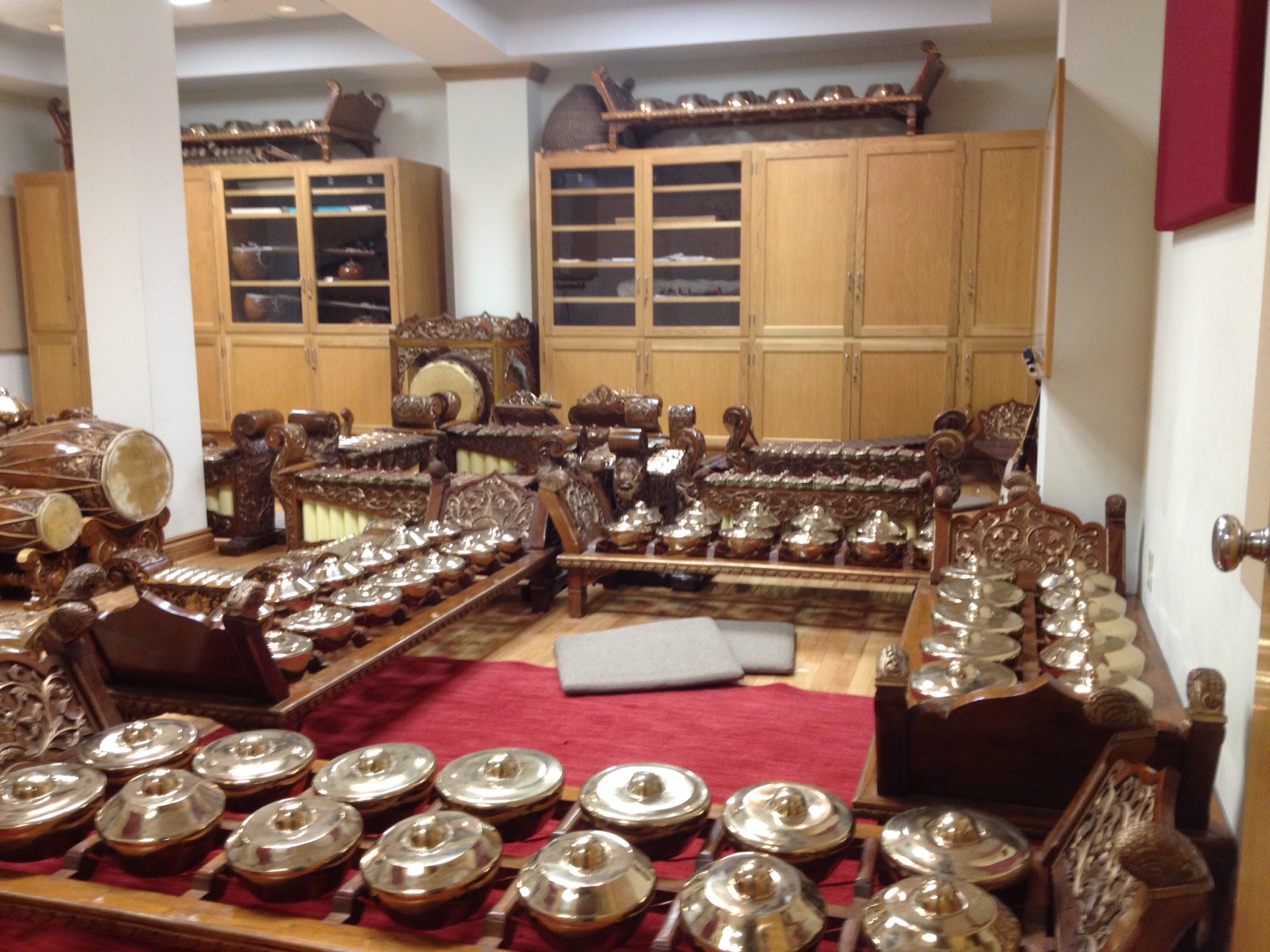
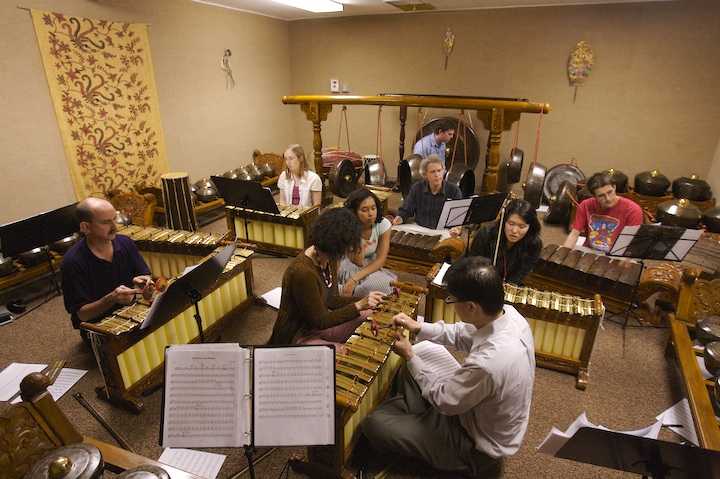
    Suhirdjan built the instruments for the HMC American Gamelan, currently in use in Claremont, California. It is a set of iron and brass instruments tuned to my own versions of pelog and slendro. We perform new works composed by myself, Lou Harrison, invited composers, and students, often combining Western instruments with those of mas Hirdjan. We have released a CD with these instruments called Imbal-Imbalan, and they can also be heard on the DVD Celestial Dance.

    Some compositions: https://soundcloud.com/bill_alves

    Bill Alves
    https://www.billalves.com/


  • Marvin Goldman

    Marvin Goldman

    Marvin Goldman purchased a gender barung (pelog) in 2001, a gender panerus in 2006 and two more gender panerus in 2012. One gender panerus slendro is now part of Gamelan Kusuma Laras in New York City; the other instruments are played and preserved in his personal collection.

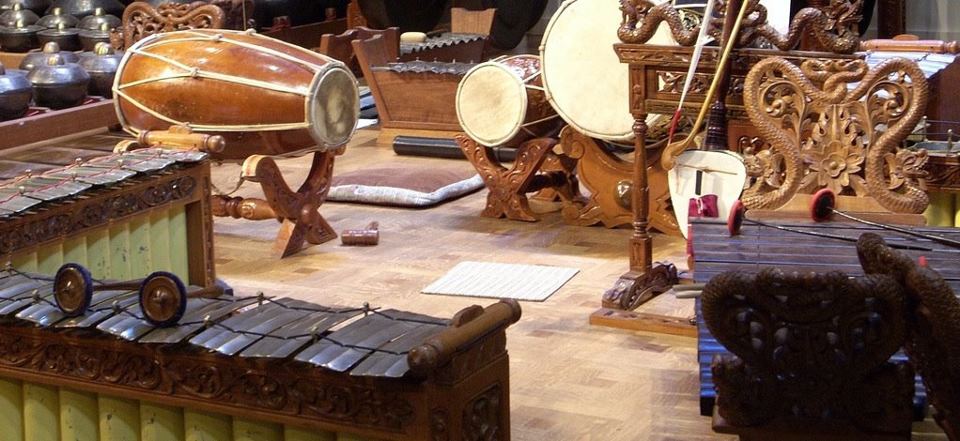
    Although the pelog scale consists of 7 pitches, the pelog gender uses only 5 pitches, either 1 – 2 – 3 – 5 – 6 in pelog bem or 7 – 2 – 3 – 5 – 6 in pelog barang. This allows the gender player to play the same patterns in pelog as in slendro (which has 5 pitches). Thus, a complete pelog gamelan must have 2 gender barung and 2 gender panerus, as it is inconvenient to replace the 1 and the 7 on the gender. Suhirdjan devised a pelog gender for which the pitches 1 and 7 were more easily exchanged without having to restring the entire row of keys. The replacement keys (either pitches 1 or 7) can be tied into place and either a weight to drop into the resonator or a partial cap for the resonator is used to tune the resonator to the appropriate pitch.


  • Nancy Cooper

    Nancy Cooper

    When I was doing fieldwork in Yogyakarta in 1989 and 1990, I commissioned a small slendro Yogyanese gamelan from Ki Suhirdjan. Due to budget and space constraints, I requested a very simple set of brass and iron instruments with the gongs made from recycled oil barrels. It is amazing to hear the deep resonance that these humble gongs produce. The gender and slenthem have brass keys and the saron and bonang (with brass bosses) are iron. Overall, Dewi Sri has a lovely bright sound and Ki Suhirdjan’s original tuning has remained remarkably stable all these years.

    As I do not have a lot of space in my apartment, I had a kenong renteng made in place of full sized kenong and frames. Each kenong pitch is represented on a brass slab like a slenthem key with a raised boss. In addition there is a kethuk key. I asked for a rosewood stain for the frames with gold highlights for the carved motif and the name Sri in honor of the rice goddess, in a circle in Javanese script and was quite pleased with the results.

    Every time I look at or play on Dewi Sri, or see photos of her performances, I think of Mas Hirdjan and how kind and gentle he was. It goes without saying that he was a fabulous kendhang player with such graceful hands. Ki Suhirdjan will always have a very special place in my heart and somehow I feel that a part of him resides with Dewi Sri.


  • University of Oregon

    This complete slendro-pelog gamelan was used regularly by the community-based group, Gamelan Sari Pandhawa, in Eugene. Several years ago, musician-in-residence, Joko Purwanto, taught Javanese gamelan at the University of Oregon.

    Mark Levy


  • University of Pittsburgh

    Kyai Tirta Rukmi is alive and well! It is mostly used for Sundanese gamelan, but we play Javanese music occasionally.

    Website:
    https://www.music.pitt.edu/performance/ensembles/university-gamelan
    https://www.music.pitt.edu/auto-created-vocabulary/gamelan-ensemble

    Andrew N. Weintraub
    Chair and Professor of Music
    University of Pittsburgh
    https://www.music.pitt.edu/people/andrew-n-weintraub


  • University of Texas at Austin

    University of Texas at Austin

    The University of Texas at Austin acquired its gamelan at the end of 1998. We were fortunate to have Pak Rasito Purwopangrawit teach for several semesters between 1999 and 2012. He named our set of instruments Kyai Rosowibowo.

    Professor Stephen Slawek is currently teaching students and community participants the repertoire he learned from Pak Rasito. Our most recent concert was on December 7, 2013. We will be working on pieces in the Spring 2014 semester for our concert in early May.

    Stephen Slawek
    Professor and Division Head, Musicology/Ethnomusicology
    Affiliate, South Asia Institute
    Butler School of Music
    The University of Texas at Austin
    slawek@austin.utexas.edu


  • Western Virginia University

    Gamelan classes are offered every three years and classes culminate in a performance in the World Music Showcase Concert. Their most recent performance was in December 2012, in which they played some new music and Lou Harrison’s Cornish Lancaran for gamelan and saxophone.

    Dr. Michael B. Vercelli
    Director, World Music Performance Center
    4101 Creative Arts Center
    (304) 293-4660
    Michael.Vercelli@mail.wvu.edu


  • Gamelan Pacifica

    Gamelan Pacifica

    In 1987, Gamelan Pacifica director, Jarrad Powell, commissioned the building of a new gamelan in Java to expand the instrumentation of their ensemble. The new gamelan was a full slendro/pelog set with some instruments built of iron and some of bronze. Suhirdjan built the iron instruments in Yogyakarta, while Tentrem built the bronze instruments in Surakarta. Subsequently, a gamelan in the Cirebon style was purchased from Endo Suanda, one of Cirebon’s most noted topeng dancers and musicians.

    Gamelan Pacifica would like to thank all the instrument builders who have explored the possibilities of gamelan instruments throughout many centuries. Their combined perseverance, knowledge, and innovation have manifested a marvelous musical idiom of ancient depth and limit-less possibilities. We are especially grateful to Suhirdjan, whose commitment to gamelan building came at just the right time to benefit Gamelan Pacifica and music lovers in the Northwest.

    Jarrad Powell
    Director
    Gamelan Pacifica
    Seattle, Washington, USA
    jarrad@gamelanpacifica.org
    https://gamelanpacifica.org


  • Arizona State University

    Arizona State University

    I teach “Children of the Mud Volcano,” a Central Javanese gamelan ensemble class at Arizona State University. We play traditional repertoire, but often with somewhat eclectic and neoIndonesian techniques appended to more traditional ones.

    Our university bought the nucleus of the gamelan in 2002 from Andy Sutton, used, but have probably more than doubled the size since then through a series of orders from Joan and Suhirdjan. Examples: 2002 only a suwukan 2 and a gong 6 (originally it was a suwukan 6); now we also have a PL7/SL1 and PL1 and a large gong 3.

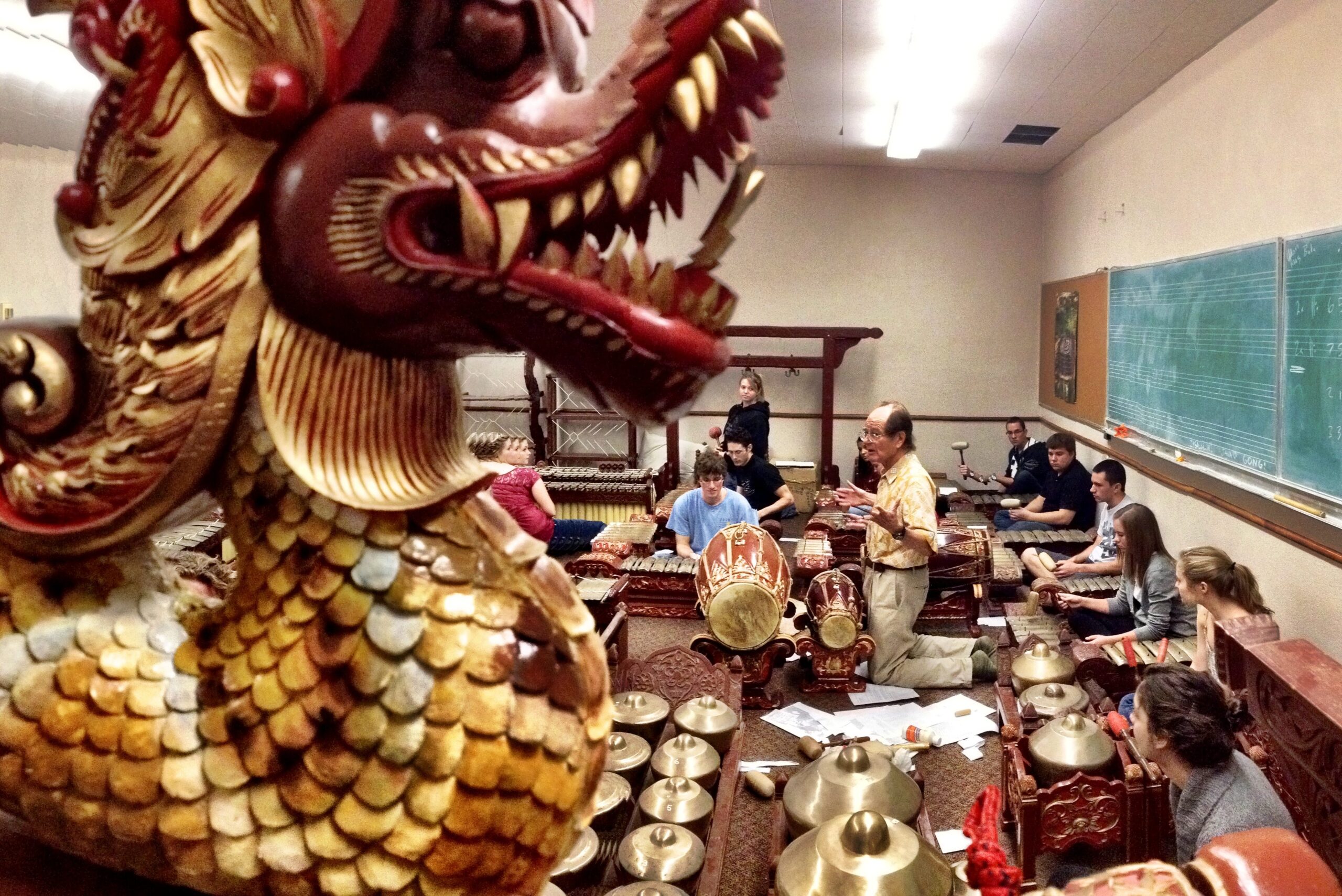
    We’ve almost doubled the number of sarons, including a saron wayang, acquired two more kendhang kalih sets, kendhang wayang, 2 more ciblons, have filled out both the kempul and kenong ranges, and numerous other instruments. We also have a distinctive naga, which our Javanese friends constructed based on two Arizona tourist postcards with pictures of diamondback rattesnakes (see photos).

    I’d say Suhirdjan and Joan have been instrumental (literally) in the success, such as it is, of our program. Suhirdjan provided the world at large a unique and indispensable artistry in the acquisition and assemblage of gamelans and gamelan instruments, and we will all be very much the poorer for his very untimely demise. Rest in Peace, Suhirdjan, and many thanks.

    Ted SolÌs
    Professor, Music History/Ethnomusicology
    School of Music
    Barrett Honors Faculty

    Director, Latin Marimba “Maderas de Comit·n” and Javanese gamelan
    “Children of the Mud Volcano”
    Arizona State University
    Tempe, AZ 85287-0405, U.S.A.
    Office phone (480)965-8612
    e-mail: ted.solis@asu.edu

  • Alan Zimmerman

    Alan Zimmerman

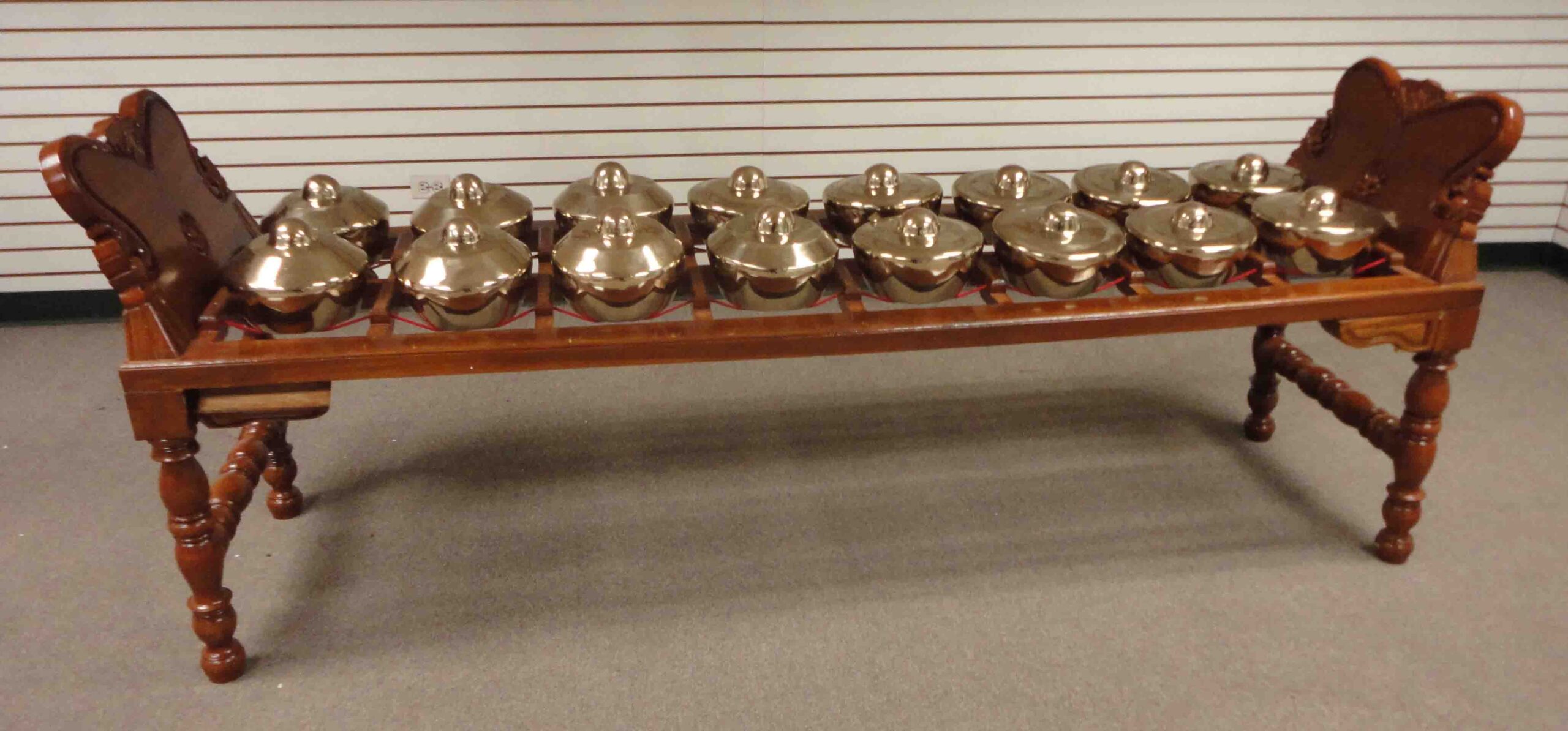
    I have no experience with gamelan as I am strictly a Western-style percussionist. However, I commissioned this unique instrument in order to perform Claude Vivier’s percussion solo Cinq Chansons pour Percussion (1980) – one of the masterworks of the percussion repertoire.

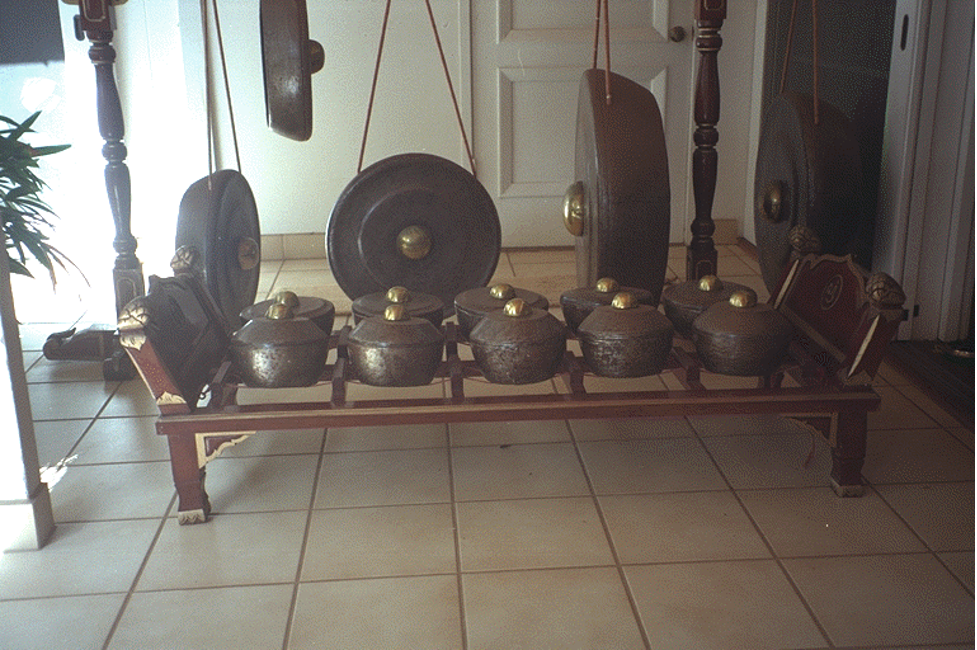
    Vivier’s work requires a bonang consisting of 16 pots tuned to specific pitches from the “chromatic” scale to be played in conjunction with 9 Thai gongs, 3 Japanese temple bells and a large Chinese gong.

    In addition, I commissioned Jody Diamond to compose a new work for this very special instrument. I feel extremely fortunate that mas Suhirdjan was able to create this beautiful instrument before his untimely death. The extraordinary sounds that emanate from this bonang will always be in memory of him.