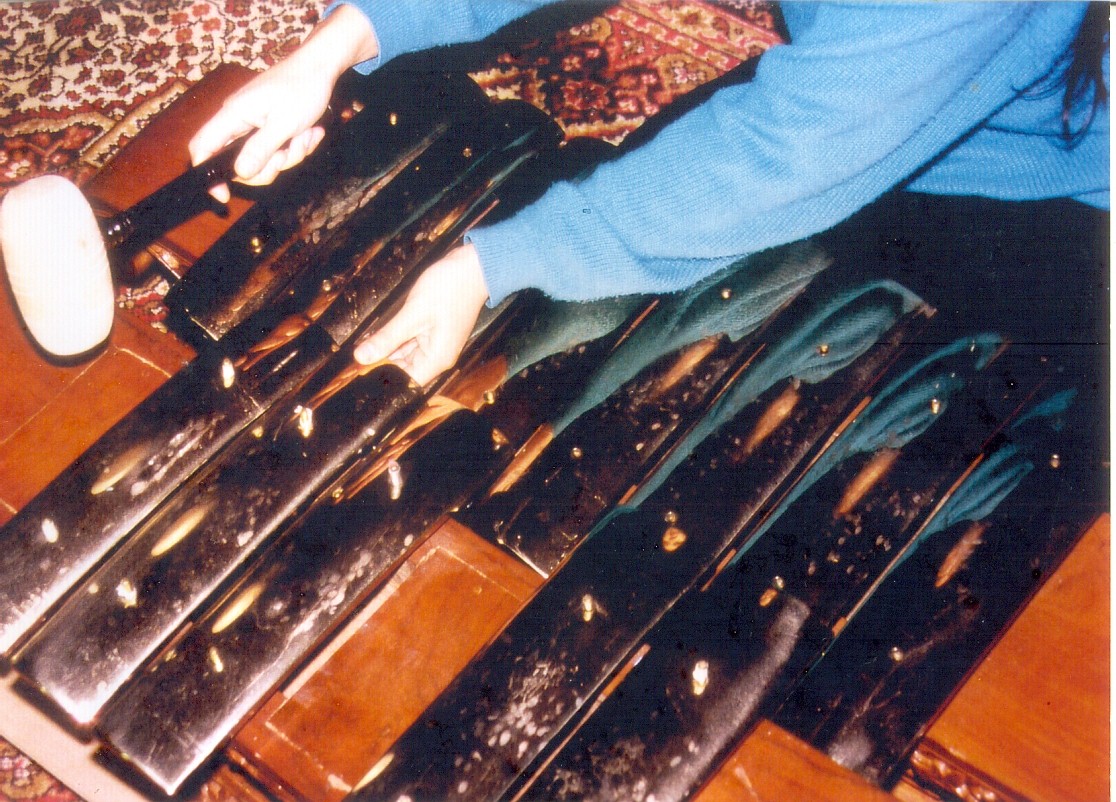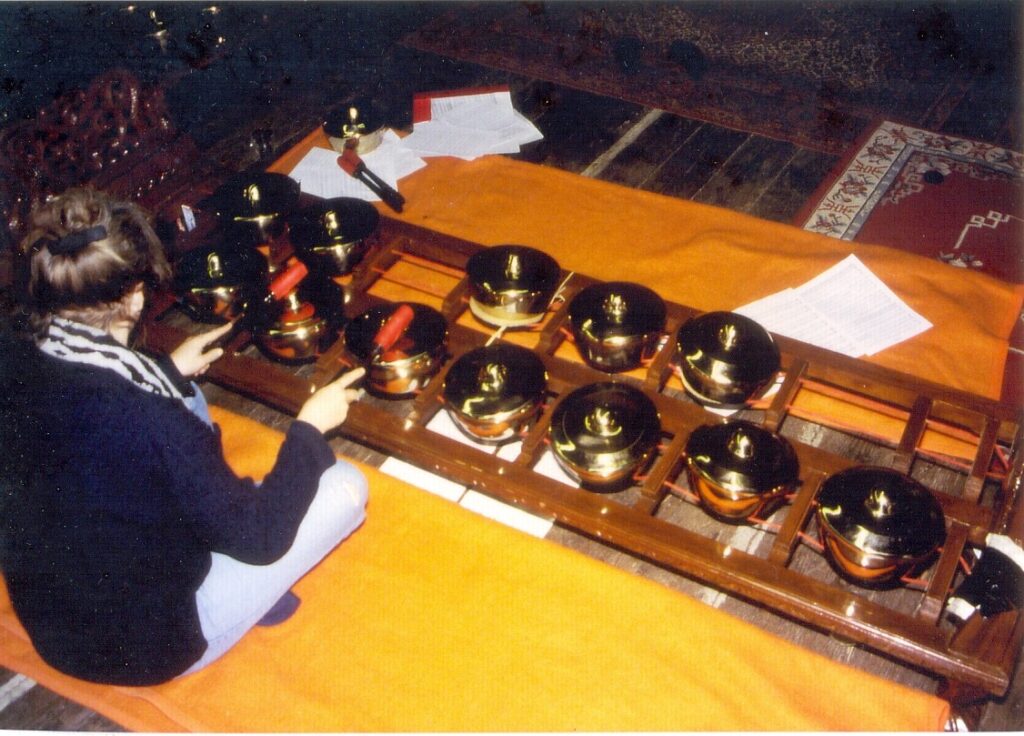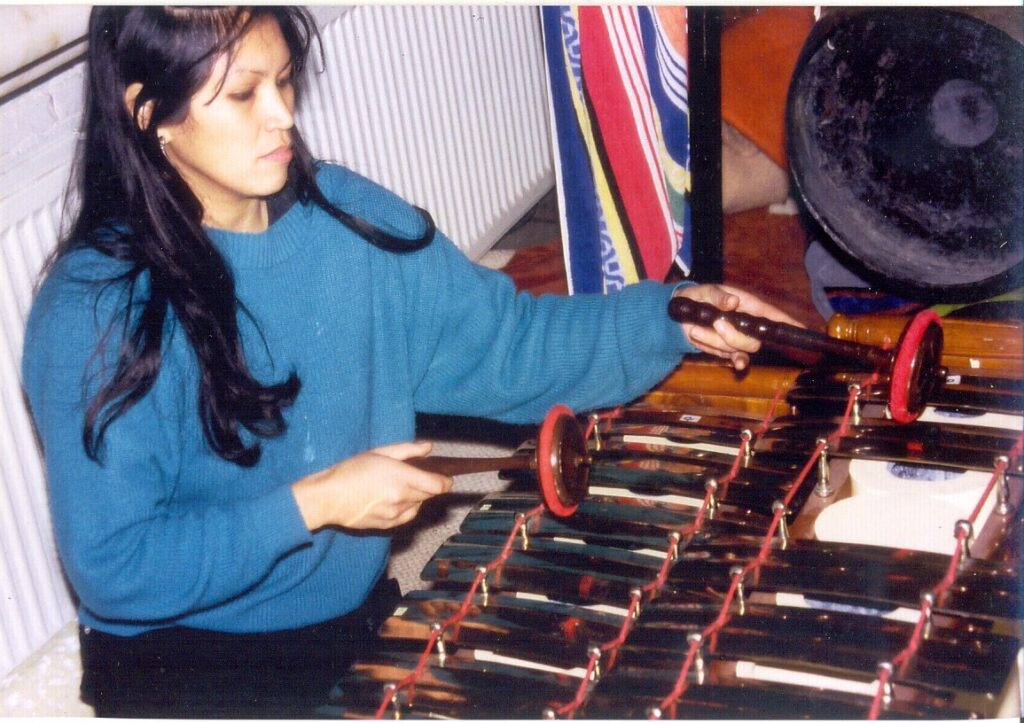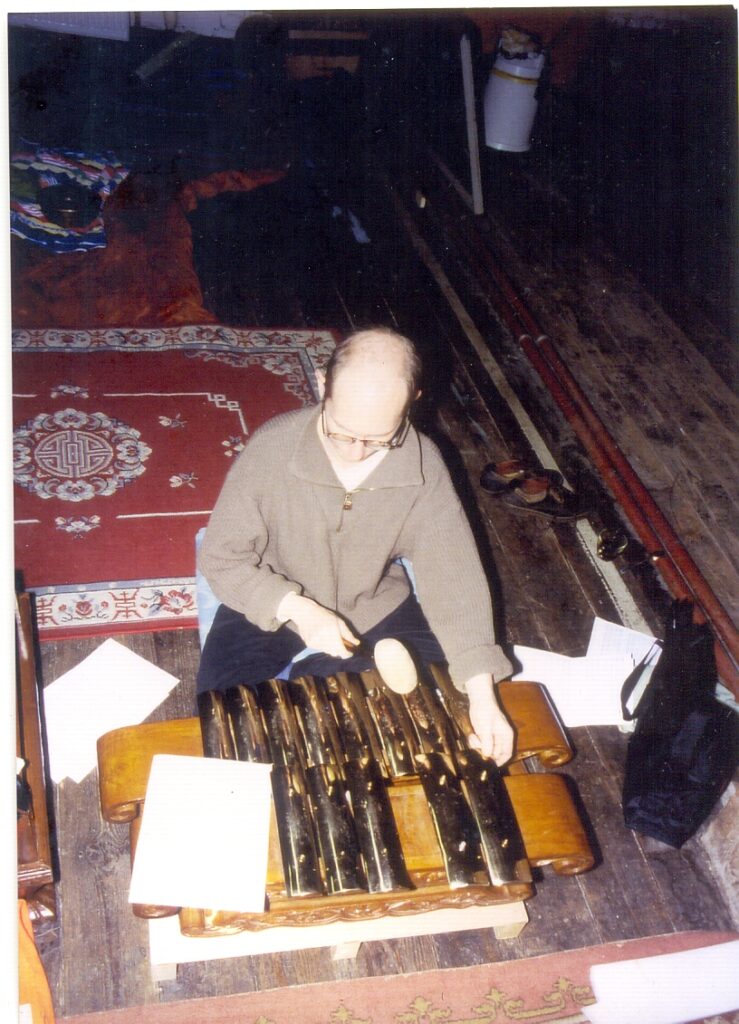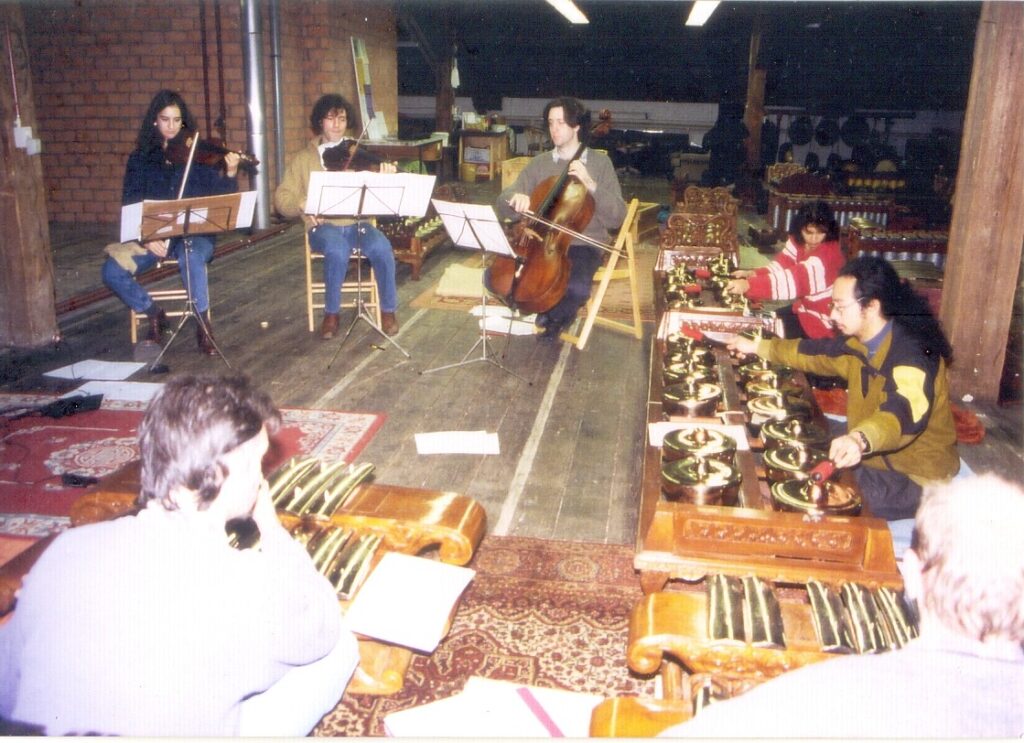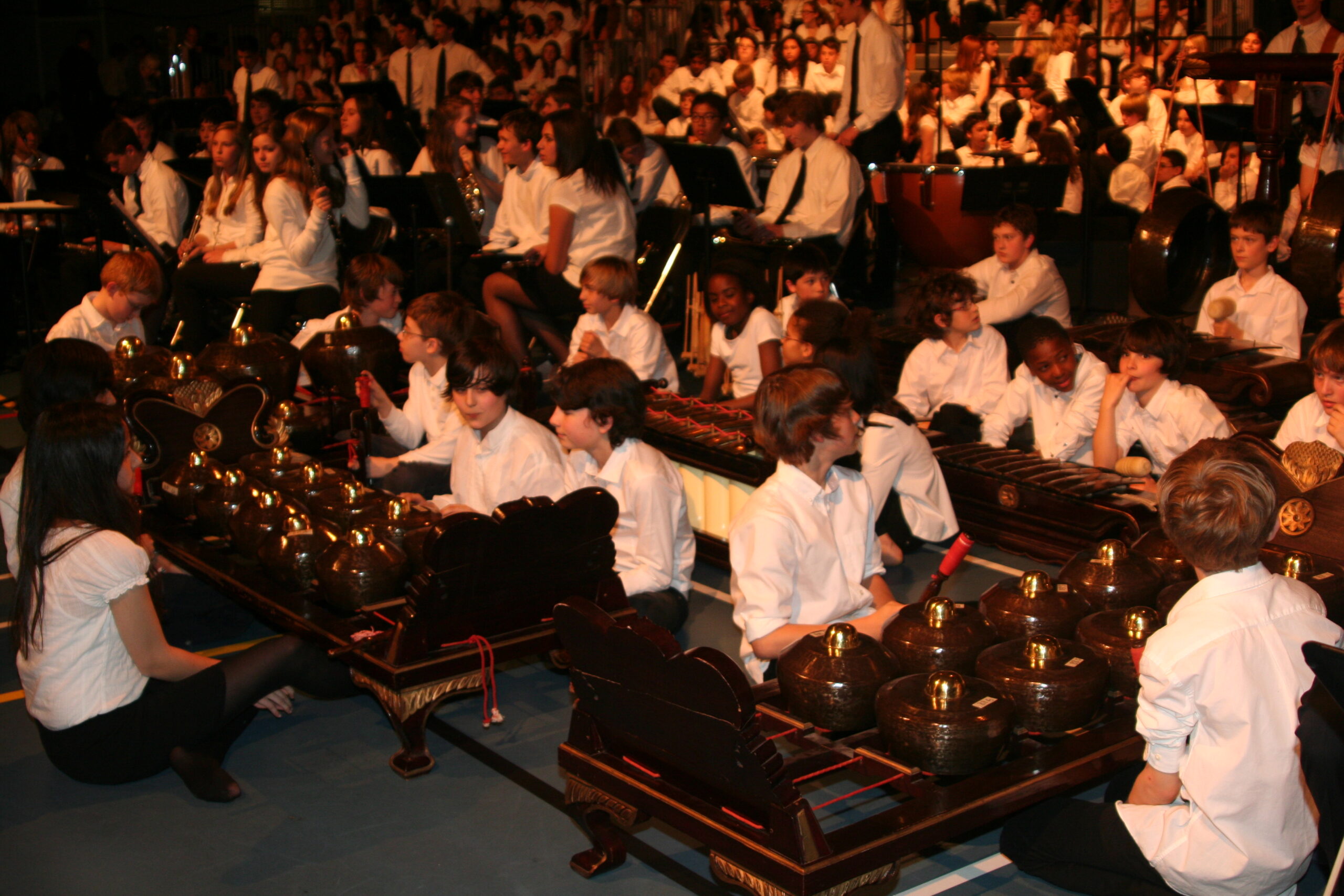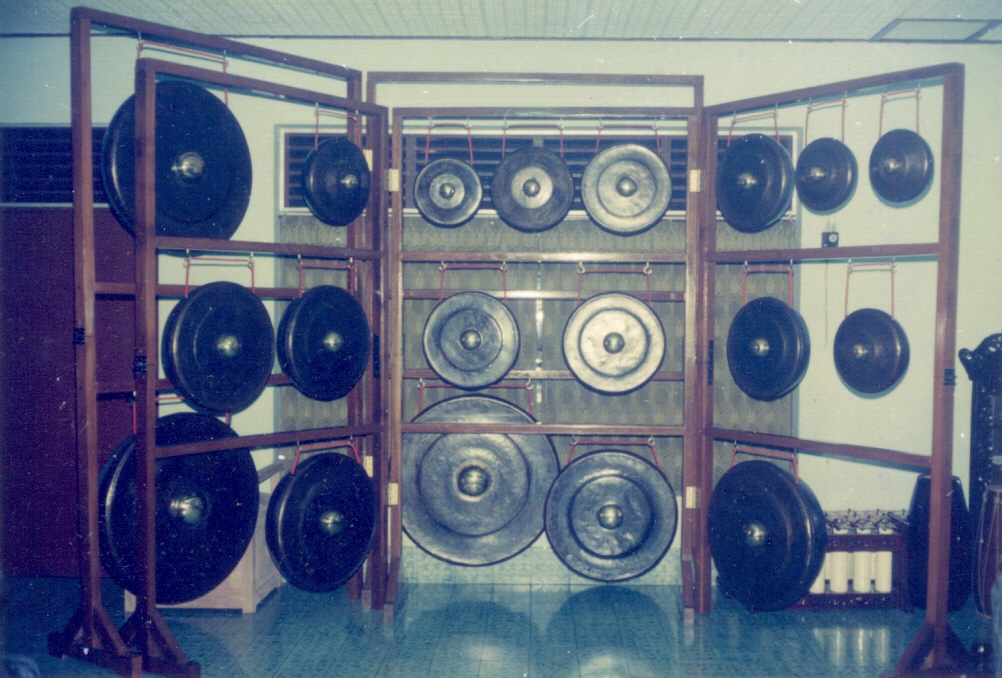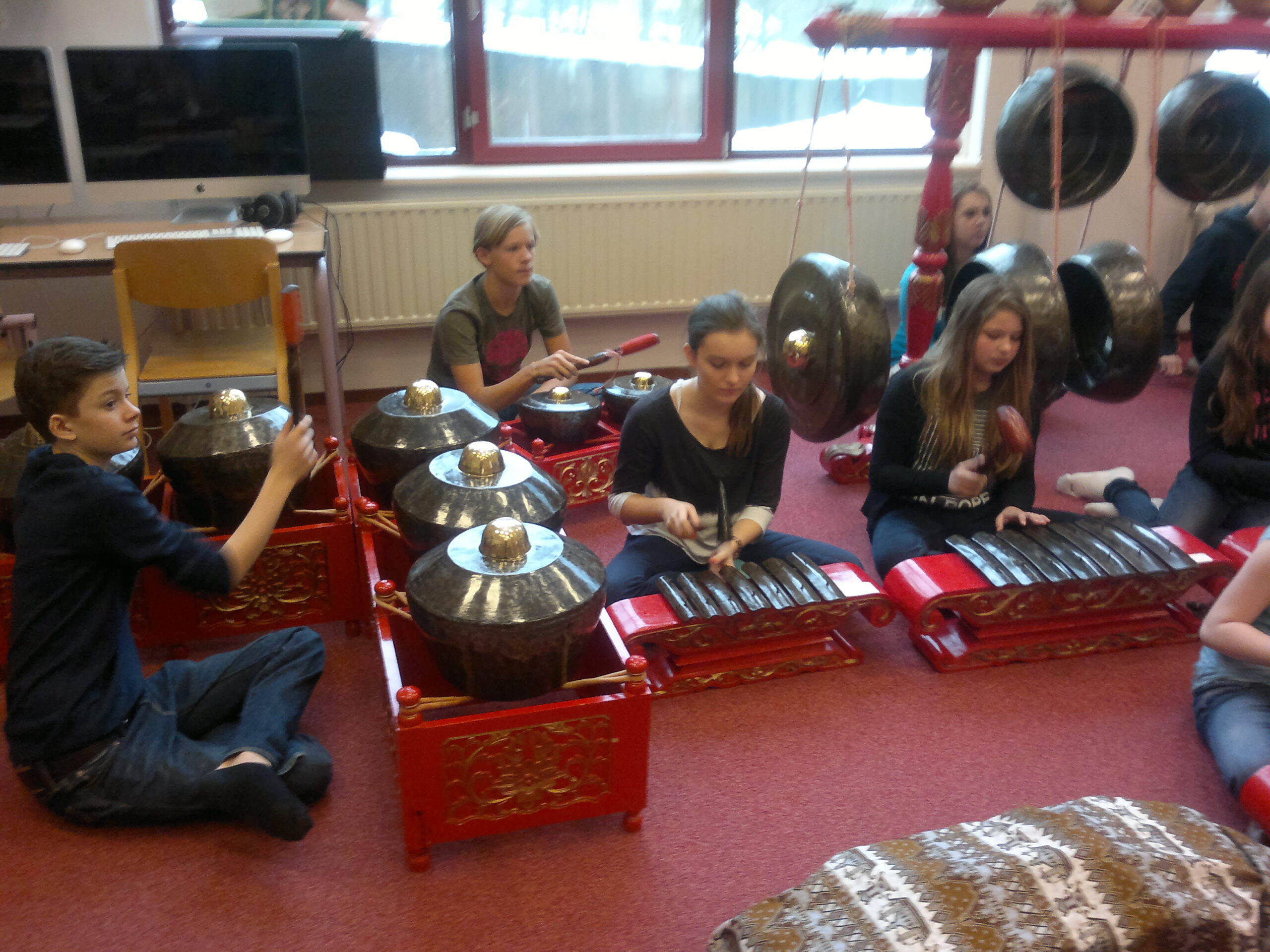
Gamelan continues to be a constant thread of the Music programme here at ISA from Middle School to 12th Grade providing a real-life entrance into a world and a culture whose concepts and attitude to music are excitingly different from those of the western world, as well as being a readily-accessible practical experience for all students, and creating the powerful sense of community which it both requires, and engenders.
The students come from: India, Ireland, Italy, Netherlands, New Zealand, Russia, Turkey, United Kingdom, and USA
Some student reflections on learning Gamelan (click on the categories below):
7th Grade Spring 2008
- We helped each other to learn
- As we make music we develop usually a very calm environment in which all of us contribute
- Since we are playing the music others have played we’re exploring different ways to play different kinds of music
- Most important thing I learned was how we can connect together in bonds of music to accomplish something within – that basically says it all
8th Grade January 2013
- “….when you play gamelan, you are all one unit and you’re all contributing to this amazingness!”
- “ …we learn aurally, by listening to the music, and to each other …”
- “ … I can recognise and remember the melody by listening …”
- “… we are told not to read the notes, but to ‘feel’ the music, to learn what is coming, and when … to be in a calm state of mind, focused, and relaxed …”
- “ … it taught me to be focused and relaxed…”
- “.. it sounds like the instruments are meant to be together as one … they assemble like a puzzle – when we play I feel we are all thinking about the same thing …”
- “ …all gamelan instruments have their own ‘jobs’… with all the instruments working on their own ‘job’’ the gamelan instruments make the right harmony that sounds very calm, but interesting
- I like the way you learn by playing
- Through the music we learn about the culture
- It is so different
- When you play all the different instruments you come to understand the way it all fits together
- It’s difficult to damp the keys at first, but with a lot of practice it comes
- …. once we knew it, I could tell the music is really beautiful
- I think playing gamelan links to our social education … because you learn a lot about a different culture while you’re learning the music
- It’s also fun and we can perform – which is a social thing to do
- I think gamelan lessons help us ‘to learn how to learn’ – we’re learning how to learn different instruments … and we learn how to play together as a group
- Learning gamelan includes the ways we have discovered to learn music (by listening, by reading notes, by watching, by numbers, by moving … )
- Playing gamelan is creative … you’re making music yourselves, that other people have made, on instruments they made
8th Grade April 2013
- The most interesting thing I find is that they show a lot of the culture – the music is very different to what we would usually play, but it sounds beautiful Thank you!
- The gamelan I believe is a very interesting instrument. I think that it has taught me to be calm and focus
- I have never played it before but I have really found it was easy and exciting to play
- I really enjoy the slenthem (Christian)
- The most challenging thing of gamelan is playing at the same time as everybody else
- The most challenging thing was when I first started and I had to damp as well as play
- The most interesting thing about the gamelan is how it makes people communicate and cooperate more (Ellen)
- The most interesting things are the different gongs and kenongs that make different types of sound – they all blend in well together (Miyu)
- The most wonderful part about gamelan is that we work together as a unit to reach our goal, which means that everyone in the group is proud to succeed (Matt)
- The most challenging part of gamelan is keeping the same pace/tempo of the music with other instruments
- The most interesting thing was how everything fitted together in harmony perfectly. The most challenging thing was no to get lost (Stijn)
- The most wonderful thing is how all the instruments combine and fit together (Thirza)
- The most interesting thing was learning to play and seeing my progress (Alexander)
- The most challenging is playing at the same time with friends (Yuuki)
- The most wonderful thing is the music
- I think that the gamelan is a very nice sounding instrument but it takes time to make and play as a group (Luca)
- Every piece shows different emotions – it can be sad, but also happy (Jella)
- Gamelan is all about working together and working with the sounds in order to do your part, and using the music to explore the culture (Carmen)
- Gamelan has been an interesting instrument, and I found that when the gamelan was done with teamwork and dedication we made beautiful sounds (Jack)
- The most wonderful thing about gamelan is that the design of each instrument fits the big picture of all the instrument designs
- The most beautiful thing is the colour scheme of the gongs and how they combine nicely. The most interesting part about gamelan is the story behind it (Luca)
- The most interesting thing is that every instrument relies on the other instruments to make the song sound as beautiful as it does together (Raphaella)
- The most exciting thing in gamelan is that everyone can play together and play many different instruments
- You can’t hear the slenthem super loudly – the first time I thought I was playing it wrong … but once you listen for it there’s almost like a vibration that ties the whole piece together (Carmen)
9th Grade – from April 2013
- The gamelan is like playing a team sport – everyone has to cooperate
- The culture behind it is fascinating (Mateo)
- Once I concentrated it became easier (Teo)
- When we played gamelan we would help each other with the notes and help each other figure out what we had to play (Abby)
- Last time I could realise the music we were playing was really beautiful because all the instruments had their own characteristics and the music echoed nicely (Kanami)
- Playing gamelan changed the way I heard music – I wasn’t looking at the notes but listening to the sound (Leah)
Ruth Andrews
Music Teacher
International School of Amsterdam
Amsterdam, the Netherlands